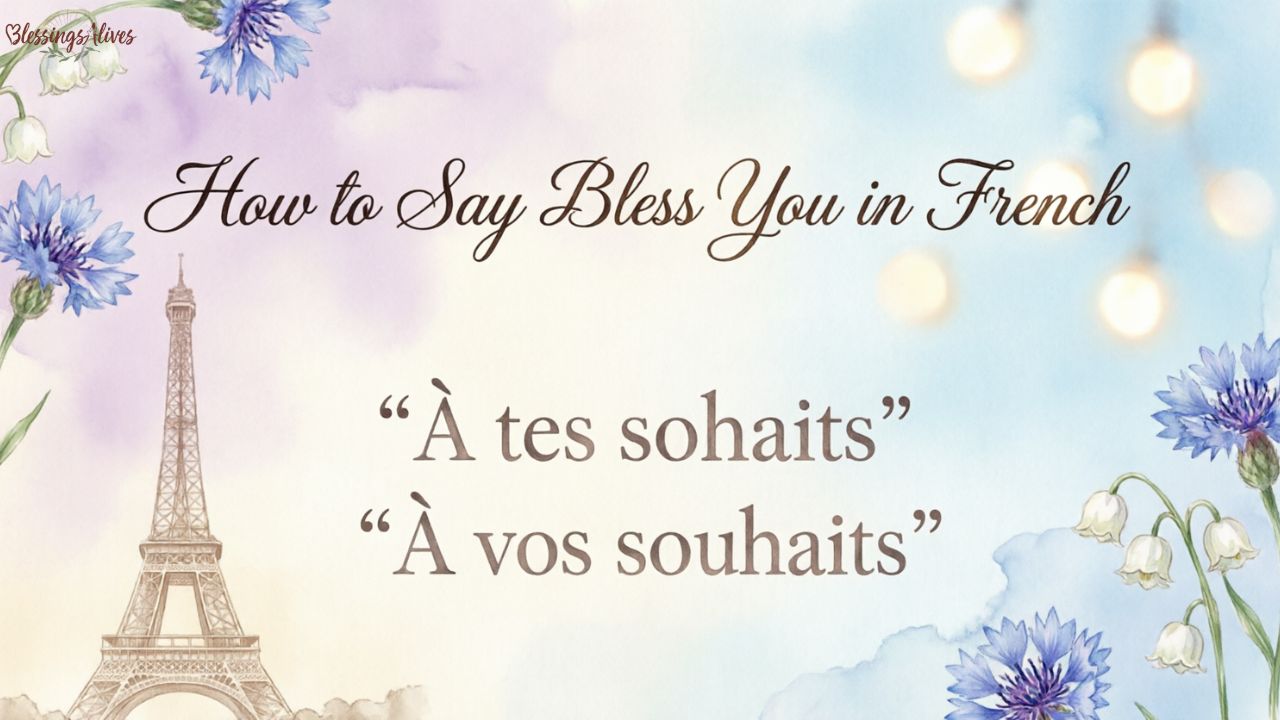
Saying bless you in French is a polite way to respond when someone sneezes. The most common expression is à tes souhaits, while à vos souhaits is used in formal situations or when speaking to more than one person. These phrases are part of everyday French conversation and reflect good manners and respect.
If you’re learning French or planning a trip to a French-speaking country, knowing the right expression can make a great impression. A small phrase can help you sound more natural and show that you understand local customs. Using the correct words also helps you communicate with confidence in everyday situations.
In this guide, you’ll learn how to say bless you in French, what the expressions mean, when to use each one, and how to pronounce them correctly. You’ll also see the differences between formal and informal phrases, regional variations, and common mistakes to avoid.
How to Say Bless You in French
French people usually respond with à tes souhaits in casual situations. The expression is friendly and common among family and friends. In formal settings, a different version is preferred. Using the right phrase makes conversations feel more natural.
The Most Common French Expression
The most common French expression after a sneeze is à tes souhaits. It is widely used in everyday life and is easy for beginners to remember.
- Meaning: A kind wish for the person who sneezed.
- Origin: Comes from the French word souhait, meaning “wish.”
- Usage: Used with friends, family, and people you know well.
- Context: Spoken immediately after someone sneezes.
À tes souhaits is part of normal conversation across France. Native speakers say it naturally without thinking much about it. Learning this phrase helps you communicate politely with confidence.
Literal English Translation
The translation of à tes souhaits is not exactly “Bless you.” Its literal meaning is closer to “To your wishes,” expressing good wishes after a sneeze.
- Literal meaning: “To your wishes.”
- English equivalent: Similar to saying “Bless you.”
- Purpose: Shows kindness and good manners.
- Cultural note: It is a polite social expression.
French and English use different words, but the intention remains the same. Both expressions show care after someone sneezes. Understanding the translation makes learning French easier for beginners.
Pronunciation Guide
Good pronunciation helps you speak French clearly. Saying à tes souhaits correctly makes your conversations sound more natural and respectful.
- Simple pronunciation: “Ah tay soo-eh.”
- Speak slowly: Practice each word separately first.
- Listen often: Copy native French speakers.
- Practice daily: Repeating the phrase builds confidence.
Perfect pronunciation takes time and regular practice. Don’t worry if it isn’t perfect at first. Most French speakers appreciate the effort when learners use polite expressions correctly.
What Does “À Tes Souhaits” Mean?
The à tes souhaits meaning is simple and polite. French people use this French phrase after someone sneezes. It expresses kind wishes and good manners in everyday conversation. Beginners often learn it as one of the first common French sayings.
Unlike the English phrase “Bless you,” à tes souhaits focuses on offering good wishes instead of a religious message. It is common throughout France and sounds natural in casual conversations. Learning its literal meaning helps you understand French culture better.
Word-by-Word Meaning
The words in à tes souhaits each have a simple meaning. Together, they form a polite expression that shares kind wishes after a sneeze.
- Meaning: “À” means “to,” “tes” means “your,” and “souhaits” means “wishes.”
- Origin: The expression comes from the French noun souhait, meaning a wish or hope.
- History: It has been used in everyday French for many generations.
- Purpose: It shows kindness rather than referring to religion.
This phrase is easy to remember because each word has a clear role. Once you understand the translation, using it in conversation becomes much more natural and comfortable.
Why French People Use It
French people say à tes souhaits to be polite after someone sneezes. It is a friendly response that fits many social situations.
- Meaning: It expresses good wishes for the person who sneezed.
- Origin: The custom developed from traditional social manners.
- History: It became a common habit in daily French conversations.
- Use: Friends, family, classmates, and coworkers often say it.
The expression helps create friendly interactions and shows respect. Even today, many native speakers continue using it because it remains a simple and thoughtful social tradition.
Everyday Situations
You can hear à tes souhaits in homes, schools, offices, and public places. It is one of the most common French sayings after a sneeze.
- Meaning: Used as a quick and polite response.
- History: The phrase has remained popular in everyday speech.
- Origin: It comes from French customs of showing courtesy.
- Examples: Family meals, classrooms, workplaces, and casual gatherings.
Understanding when to use this expression helps you sound more natural in French. It is a useful phrase for travel, study, and daily conversations with native speakers.
Read More : 500+ Have a Blessed Day Wishes, Quotes, Messages, Bible Verses, Prayers & Images
À Tes Souhaits vs À Vos Souhaits
À tes souhaits and à vos souhaits are common polite expressions used after someone sneezes. Both phrases share the same purpose, but each fits a different situation. Understanding this difference helps you use formal French and informal French correctly in everyday conversations.
These expressions follow simple French grammar rules. À tes souhaits is used in the singular with someone you know well. À vos souhaits is used for formal situations or when speaking to more than one person. Choosing the right phrase shows respect and confidence.
Informal Version
À tes souhaits is the informal expression used after one person sneezes. It sounds friendly and relaxed. French speakers often use it with people they know well.
Using à tes souhaits correctly helps you sound more like a native speaker. It is easy to remember and suitable for casual situations. Most beginners learn this phrase early because it is useful every day.
When speaking with people you know, this expression feels comfortable and polite. It matches the friendly style of informal French. Using it naturally improves your communication skills.
Formal Version
À vos souhaits is the respectful version of the expression. It is commonly used in formal French conversations. This phrase shows courtesy and good manners.
The word vos represents respect and can also refer to the plural form. Because of this, the expression has two practical uses. Native speakers select it whenever a formal tone is needed.
Using à vos souhaits helps you communicate politely in professional and social settings. It reflects French etiquette and respectful language. Learners benefit from knowing when this version is more appropriate.
Which One Should You Use?
The correct choice depends on who you are speaking to. French grammar and social customs both play an important role. Matching the phrase to the situation makes your speech sound natural.
Choose à tes souhaits for one friend or family member. Choose à vos souhaits for strangers, older people, teachers, or groups. This simple rule is followed in everyday French conversations.
If you are unsure, the formal version is usually the safer option. It shows respect without sounding unusual. Native speakers appreciate polite language in both casual and formal settings.
Learning both expressions gives you confidence in real conversations. You will understand when to use each phrase correctly. This small difference makes your French sound more accurate and culturally appropriate.
What Do French People Say After Someone Sneezes?

French people usually respond politely after someone sneezes. The most common expression is à tes souhaits or à vos souhaits, depending on the situation. These phrases are part of everyday conversation and show good etiquette. They are used naturally by people of all ages.
Unlike English, French expressions focus on offering good wishes instead of a religious message. The choice of words depends on whether the conversation is formal or informal. Learning these responses helps you understand French customs and communicate with confidence.
Common Responses
The most common response after a sneeze is à tes souhaits. Friends, relatives, and classmates often use this phrase in casual conversations. It is simple, polite, and widely understood across France.
When speaking to someone you do not know well, people usually say à vos souhaits. This version sounds more respectful and is suitable for professional or public situations. Both expressions share the same purpose of showing courtesy after a sneeze.
French Sneezing Etiquette
French etiquette encourages people to respond politely when someone sneezes nearby. Saying the appropriate expression is considered a thoughtful social habit. It helps create a friendly and respectful atmosphere during conversations.
People also try to cover their mouth and apologize quietly if they sneeze in public. Others often reply with the correct phrase without interrupting the conversation. These simple manners reflect everyday politeness in French culture.
Native Speaker Usage
Native French speakers use these expressions naturally without thinking about them. The phrases are heard at home, in schools, offices, restaurants, and many other daily settings. They remain a normal part of spoken French.
Visitors and French learners can also use these expressions with confidence. Choosing the right phrase for the situation leaves a positive impression and shows respect for local customs. Regular practice makes these responses feel natural in conversation.
It also helps you follow local customs, communicate politely, and feel comfortable in everyday French conversations.
Is “God Bless You” Common in France?
The phrase “God bless you” is not commonly used in France after someone sneezes. Instead, French people prefer expressions like à tes souhaits or à vos souhaits. These phrases are part of everyday French and reflect local manners rather than religious customs.
Many English speakers expect to hear a direct translation of “God bless you,” but French conversation follows a different tradition. The focus is on offering kind wishes instead of mentioning God. Understanding this difference helps learners communicate more naturally in French culture.
Cultural Differences
Every country has its own customs after someone sneezes. In French culture, people usually offer good wishes instead of using a religious expression. This makes the French response different from the common English tradition.
These expressions have become part of daily social life across France. People use them to show politeness and respect during conversations. Learning these customs helps visitors understand local behavior and avoid confusion.
French speakers value simple and respectful communication. Their expressions match everyday manners instead of religious beliefs. Knowing these cultural differences improves both language skills and social confidence.
Using the correct expression shows respect for French customs. Small details like these make conversations smoother and more comfortable.
Religious vs Everyday Expressions
The English phrase “God bless you” has religious roots. French expressions after a sneeze are usually not connected to religion. They focus on offering good wishes in a polite way.
Most people in France choose expressions that fit everyday conversation. They are suitable in schools, workplaces, homes, and public places. This makes them practical for many situations.
Religious phrases still exist in French, but they are not the normal response after someone sneezes. Native speakers generally prefer traditional social expressions instead. This difference reflects modern language habits.
French learners should avoid translating English expressions word for word. Using the common French phrase sounds more natural. It also matches local expectations in daily conversations.
Modern Usage
Today, people across France continue using à tes souhaits and à vos souhaits after a sneeze. These expressions remain popular among different age groups. They are easy to understand and widely accepted.
Modern communication has changed many language habits, yet these polite expressions remain common. They are heard in homes, schools, offices, and public spaces. Their continued use shows the importance of courtesy in French society.
Visitors who use these phrases often receive positive reactions from native speakers. They demonstrate an understanding of everyday French customs. Simple expressions like these help build friendly conversations.
Learning current language habits is just as important as learning grammar. Speaking naturally makes communication easier and more enjoyable. These expressions remain a useful part of modern French.
Knowing why “God bless you” is uncommon in France helps you understand French customs. Using local expressions creates natural conversations and shows respect for everyday language and traditions.
Bless You in Canadian French and Other French-Speaking Countries
French is spoken in many countries, so polite expressions can vary slightly by region. While à tes souhaits and à vos souhaits are widely understood, local habits and pronunciation may differ. Learning these regional differences helps you communicate more naturally with French speakers around the world.
Although the meaning stays the same, each French-speaking region has its own speaking style. Travelers and language learners benefit from knowing these small differences. Understanding regional French makes conversations easier and helps you appreciate local culture.
Quebec French
In Quebec French, people commonly use à tes souhaits and à vos souhaits after someone sneezes. The expressions are the same as those used in France, although the accent and pronunciation may sound different. These phrases remain polite and are heard in homes, schools, workplaces, and public places throughout French-speaking Canada.
Belgium
Belgian French uses the same polite expressions after a sneeze as France. Most people naturally say à tes souhaits in casual situations and à vos souhaits in formal settings. The vocabulary stays consistent, making communication easy for visitors across French-speaking regions.
Switzerland
In Swiss French, speakers also use à tes souhaits and à vos souhaits as everyday responses after a sneeze. While local accents and speaking styles differ slightly, the expressions are familiar and widely accepted. Visitors can confidently use these phrases throughout French-speaking areas of Switzerland.
Learning how these expressions are used in different French-speaking countries improves your communication skills. It also helps you understand regional customs and speak with greater confidence while traveling.
Common Mistakes When Saying Bless You in French
Many French learners make small mistakes when saying bless you in French. These errors are normal during language learning and become easier to fix with regular practice. Understanding the correct pronunciation, grammar, and usage helps you speak more naturally and confidently.
Most beginner mistakes happen because learners translate directly from English or choose the wrong expression. Learning when to use à tes souhaits or à vos souhaits makes conversations sound more natural. Paying attention to simple rules improves both speaking skills and confidence.
IPA Pronunciation Errors
Many learners struggle with the pronunciation of à tes souhaits because some French sounds do not exist in English. Speaking too quickly or stressing the wrong syllable can make the phrase difficult to understand. Listening to native speakers and repeating the expression slowly helps improve pronunciation and builds confidence over time.
Choosing the Wrong Phrase
A common mistake is using à tes souhaits in formal situations or saying à vos souhaits to a close friend. The correct choice depends on your relationship with the other person and the setting. Learning this difference helps you sound polite and respectful in everyday French conversations.
Grammar Tips
Simple grammar rules make these expressions easy to remember. Use tes when speaking to one person informally, and use vos for formal situations or when addressing more than one person. Following this basic rule helps learners avoid common errors and communicate more accurately in French.
Avoiding these common mistakes helps you speak French with greater confidence. Correct pronunciation, proper grammar, and choosing the right expression make everyday conversations smoother and more natural.
Similar French Polite Expressions You Should Know
Learning a few French vocabulary words beyond “bless you” makes everyday conversations easier. Common polite phrases help you speak respectfully in different situations. These useful French phrases are widely used by native speakers and are an important part of everyday expressions for beginners and travelers.
Thank You
The most common way to say thank you in French is merci. It is suitable for both formal and informal situations and is used every day across French-speaking countries. For extra politeness, people often say merci beaucoup, which means “thank you very much” and shows greater appreciation.
You’re Welcome
The usual reply to merci is de rien, which means “you’re welcome.” In more formal situations, French speakers may also use je vous en prie. Both expressions are polite, easy to remember, and commonly heard in daily conversations.
Excuse Me
French speakers often say excusez-moi in formal situations and excuse-moi with friends or family. These expressions are used to apologize, get someone’s attention, or politely move through a crowd. They are essential phrases for respectful communication in everyday French.
Learning these polite French expressions improves your communication skills. They help you sound respectful, understand daily conversations, and interact naturally with native French speakers in many situations.
Bless You in Different Languages
Learning how to say bless you in other languages helps you communicate politely with people from different cultures. Each language has its own traditional expression after a sneeze. While the words are different, they all show kindness, respect, and good manners in everyday conversations.
English
In English, the usual response after someone sneezes is “Bless you.” This expression has been used for centuries and remains common in daily conversations. It is suitable in both casual and formal settings and is understood throughout English-speaking countries.
German (Gesundheit)
In German, people commonly say Gesundheit, which means “health.” Unlike the English phrase, it does not mention a blessing or religion. The expression is widely used after a sneeze and has also become familiar in many English-speaking communities.
Spanish
In Spanish, people often say Salud, which means “health.” It is the most common response after someone sneezes and is used in many Spanish-speaking countries. The phrase is short, polite, and reflects the tradition of wishing someone good health.
Understanding these multilingual expressions helps you appreciate different cultures and respond politely in international conversations. Learning simple phrases builds confidence and improves communication wherever you travel.
Read More : A Simple Wish to Have a Blessed Weekend
Frequently Asked Questions
How do French people respond when someone sneezes?
Bless you in French is usually said as à tes souhaits or à vos souhaits, depending on whether the situation is informal or formal.
What is the correct phrase to use with a stranger?
Use bless you in French as à vos souhaits when speaking politely to strangers, older people, or in professional settings.
Is there a direct French translation of “God bless you”?
There is no exact religious equivalent. Bless you in French usually expresses good wishes rather than a religious blessing after sneezing.
Which expression should beginners learn first?
Most learners start with à tes souhaits. Bless you in French becomes easier to remember through regular listening and everyday practice.
Do French-speaking countries use the same expression?
Most French-speaking regions understand the same phrases. Bless you in French remains widely accepted, although pronunciation and accents may differ.
How can I pronounce the French phrase correctly?
Listen to native speakers and repeat slowly. Bless you in French sounds more natural when you practice the pronunciation regularly.
Is it rude not to say anything after someone sneezes?
Many people appreciate a polite response. Bless you in French is considered a thoughtful expression in everyday social situations.
When should I use the formal version instead of the informal one?
Choose the formal expression for strangers, teachers, or groups. Bless you in French should match the relationship and conversation setting.
Conclusion
In French, saying the right phrase after someone sneezes is a simple way to show kindness and respect. The most common expressions are à tes souhaits and à vos souhaits. The choice depends on whether the situation is informal or formal. Learning these expressions helps you sound more natural in conversations. It also gives you a better understanding of French culture and everyday manners. With a little practice, you can use them confidently.
Knowing how to say bless you in French is useful for travel, language learning, and daily communication. It helps you respond politely in different situations and understand native speakers more easily. Remember to choose the correct expression based on who you are speaking to. Small phrases like these can make conversations friendlier and more respectful. Regular practice will improve your confidence and make your French sound more natural.

Hi, I’m Asma, the founder of Blessingsalives
It is a creative digital platform focused on sharing uplifting content, simple ideas, and meaningful inspiration for everyday life.