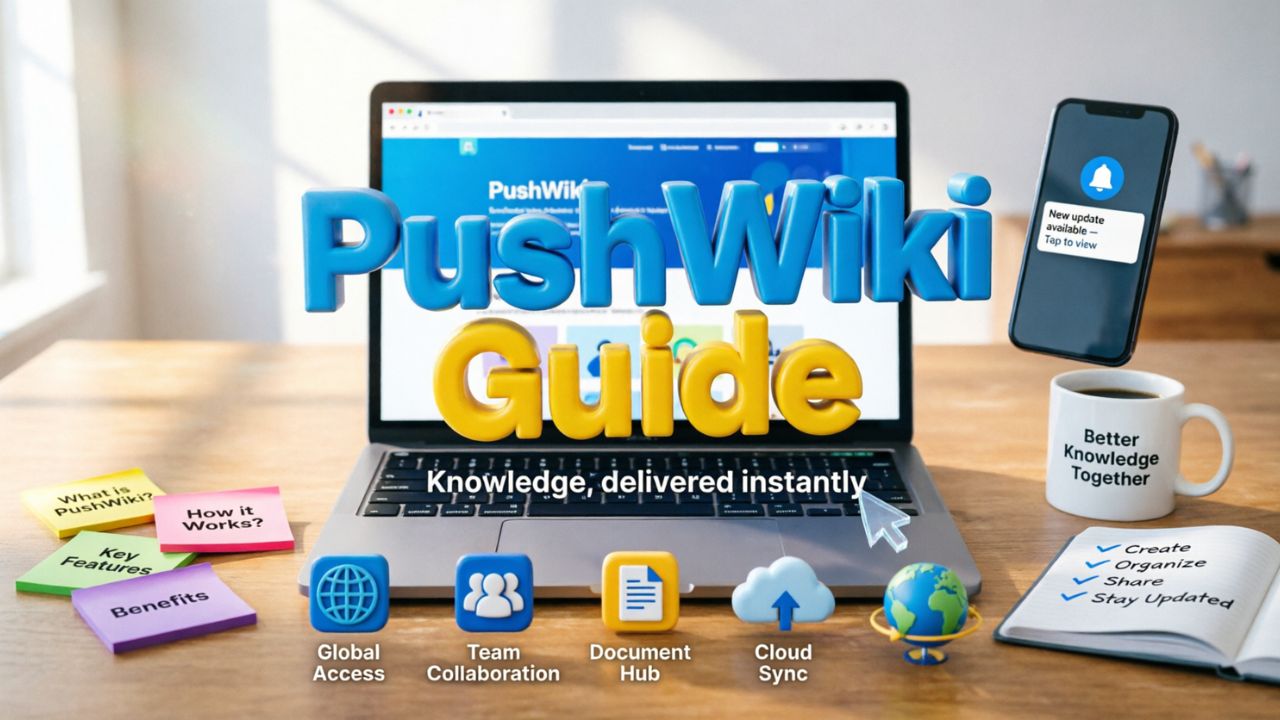
PushWiki Com is an online information website discussed in connection with digital learning, SEO, blogging, technology, and website development. But what does PushWiki Com actually offer, and can you trust the information it publishes? If you have searched for a PushWiki Com review, its legitimacy, or whether the website is safe, understanding its purpose is the first step. This guide examines its reported topics, publishing model, credibility signals, and online safety considerations. You’ll also learn how to check website ownership, author transparency, source citations, and content accuracy before relying on any information or confusing it with a collaborative wiki.
What Is PushWiki Com?
PushWiki Com is described as a website publishing informational articles about digital topics and online activities. Its reported subject areas include SEO, blogging, website management, and digital marketing.
The available descriptions suggest an editorial publishing model rather than a collaborative encyclopedia like Wikipedia. However, the website’s ownership, publishing process, and current features require direct verification.
PushWiki Com at a Glance
| Feature | Details |
| Website name | PushWiki Com |
| Reported website type | Informational content website |
| Reported topics | SEO, blogging, digital marketing, technology |
| Potential audience | Beginners, bloggers, students, website owners |
| Content format | Informational articles |
| Access | Check the current website directly |
| Collaborative editing | Not independently confirmed |
| Ownership | Requires verification |
This table summarizes the website’s reported purpose, not independently verified details about every feature. Check the intended domain and its current pages before relying on this information.
Why the Name PushWiki Can Be Confusing
The word “wiki” commonly refers to a website where contributors can create or edit pages collaboratively. Wikipedia is a familiar example, with community editing, revision histories, and documented editorial policies.
However, a domain containing “wiki” does not automatically provide those features. PushWiki Com appears closer to a conventional content website based on the supplied descriptions, but its publishing model should be confirmed through direct inspection.
What Visitors Can Expect From PushWiki Com
The website is associated with articles explaining digital terminology, website creation, online marketing, and search engine optimization. Such material can introduce beginners to unfamiliar concepts without requiring advanced technical knowledge.
The usefulness of an individual article depends on its accuracy, sources, and relevance. Check whether it provides verifiable information, identifies its author, and distinguishes factual statements from opinions.
What Does PushWiki Com Actually Offer?
PushWiki Com is reported to cover several digital subjects relevant to bloggers, website owners, and people learning online marketing. These subjects can introduce readers to the basic principles behind publishing and promoting websites.
The exact selection of articles may change. Treat the following categories as reported areas of coverage rather than a confirmed list of everything currently published.
Educational Articles and Informational Resources
Informational websites explain concepts, answer questions, and introduce readers to unfamiliar subjects. PushWiki Com is described as offering this type of content, with explanations aimed at a general audience.
Clear definitions and practical examples can help readers understand complex ideas. However, simple language alone does not establish accuracy. Reliable educational content also needs appropriate evidence and careful explanations.
Technology Topics and Digital Guides
Technology guides can explain software, internet services, digital tools, and common online processes. Beginners may use these articles to understand a subject before consulting more detailed documentation.
Technical information can become outdated as products change. Before following instructions involving software, account settings, or security, compare the advice with current documentation from the relevant provider.
SEO and Digital Marketing Advice
Search engine optimization (SEO) helps search engines understand webpages and connect relevant content with users’ searches. Common subjects include keyword research, search intent, on-page optimization, technical SEO, and internal linking.
Digital marketing covers additional areas, including content marketing, email campaigns, social media promotion, audience engagement, and conversion optimization. Advice about these subjects should be assessed against current guidance, relevant evidence, and the needs of the intended audience.
Blogging and Website Development
Blogging involves more than publishing articles. Website owners also make decisions about domain registration, web hosting, WordPress, content management systems, website structure, and ongoing maintenance.
Useful guides explain these tasks clearly and acknowledge their limitations. For example, reliable hosting can support website performance, but it does not guarantee search rankings, traffic, or business success.
Other Topics Available on PushWiki Com
The supplied descriptions also associate PushWiki Com with online business, general technology, and internet-related topics. Such coverage could interest readers who want introductory explanations of digital tools and concepts.
Check the current website to confirm which categories are available. Do not assume that every topic mentioned in an older description remains part of the site’s content.
How Does PushWiki Com Work?
PushWiki Com appears to function as a content website where visitors can read articles about digital subjects. Its reported purpose is to make information accessible to people seeking straightforward explanations.
The available material does not establish its internal publishing process or content management system. Those details should remain unconfirmed unless the website or another reliable source documents them.
How the Website Organizes Its Content
Content websites often arrange articles using categories, headings, tags, and links to related pages. This structure helps readers move between connected subjects, such as blogging, keyword research, and website optimization.
To assess PushWiki Com, inspect its actual navigation and article organization. A clear structure can improve usability, but it does not independently demonstrate that the information is accurate.
Finding Articles Through Navigation and Search
Visitors may find articles through search engines, category menus, internal links, or a website search function, if available. These features can make relevant information easier to locate.
Always check the complete domain before opening a result. Similar names can lead to unrelated websites, so verify the address before downloading files or sharing personal information.
How Content Appears to Be Published
An article’s byline, publication date, and layout can offer clues about how a website presents its content. Author profiles and editorial policies can provide additional information about responsibility for published material.
However, appearance alone cannot establish who writes or reviews the articles. Look for verifiable author credentials and publishing disclosures rather than assuming a professional editorial team exists.
Can Visitors Edit or Submit Articles?
Traditional wikis generally provide ways for contributors to edit pages and review earlier versions. Depending on the platform, they may also offer contributor accounts, discussion pages, and documented editing rules.
The supplied information does not establish that PushWiki Com offers these features. Check its current pages for editing controls or submission policies before concluding that visitors can contribute directly.
Is PushWiki Com a Real Wiki Website?
Whether PushWiki Com qualifies as a traditional wiki depends on its actual publishing features. A website can share information without supporting collaborative page editing.
The available descriptions suggest that PushWiki Com operates more like an editorial content website than a collaborative encyclopedia. Direct evidence about editing permissions and revision histories would help confirm that distinction.
What Defines a Traditional Wiki?
A traditional wiki allows multiple contributors to create or modify pages under a shared set of rules. Many wikis also maintain revision histories that help readers review earlier versions.
Wikipedia illustrates this model through community participation and documented policies. These features distinguish collaborative reference platforms from websites where publishing access remains under an owner’s or editor’s control.
Does PushWiki Com Support Collaborative Editing?
Look for visible editing controls, contributor registration, revision histories, and instructions for submitting changes. These features offer more useful evidence than a website’s name alone.
If the site does not display such options, it may use a conventional editorial model. Nevertheless, inspect the relevant pages before making a definitive statement about its editing capabilities.
PushWiki Com vs. Wikipedia: Key Differences
Wikipedia is a collaborative encyclopedia with documented community policies and article histories. PushWiki Com is described as a narrower content website focused on digital subjects.
The platforms therefore appear to serve different purposes. Neither a familiar brand nor an editorial format guarantees that every article is accurate, so examine citations and verify important claims independently.
Is PushWiki Com More Like a Blog?
A traditional blog publishes articles under the control of an individual, publisher, or editorial team. It may contain tutorials, explainers, reviews, or commentary without allowing public editing.
Based on the supplied descriptions, PushWiki Com appears closer to this model than to Wikipedia. Its actual publishing arrangements, however, should be verified rather than inferred solely from its layout.
Is PushWiki Com Legit or a Scam?
The question “Is PushWiki Com legit?” requires evidence about the website, not just a description of its purpose. A site can publish genuine articles without demonstrating strong editorial oversight or independent credibility.
The information supplied for this review does not establish that PushWiki Com is a scam or prove that it meets every standard of a trustworthy publisher. Its ownership, contact details, and published claims should be checked before reaching a firm conclusion.
What Can Be Confirmed About PushWiki Com?
The supplied articles describe PushWiki Com as an informational website associated with SEO, blogging, digital marketing, and technology. These descriptions do not independently verify its current features or business arrangements.
Visit the intended domain and inspect the available pages. Confirm that the website loads as expected, that the address is correct, and that its content matches the subject you intended to research.
Separating Verified Facts From Website Claims
A website may describe itself as educational, authoritative, or widely trusted. Such statements explain how the publisher presents its work, but they do not independently prove expertise or accuracy.
Check specific claims against reliable external sources. When supporting evidence is unavailable, describe the claim as unverified rather than presenting it as an established fact.
Website Ownership and Operator Transparency
Ownership information helps readers identify who operates a website and who is responsible for its content. An identifiable publisher also makes it easier to investigate potential conflicts of interest.
Check the About page, publisher disclosures, and available business information. If the operator is not clearly identified, acknowledge that limitation instead of guessing the owner’s name or background.
Author Credentials and Editorial Accountability
Author biographies can help readers assess a writer’s relevant experience in SEO, technology, or digital publishing. Verifiable professional profiles and published work offer stronger evidence than unsupported claims of expertise.
Also, check whether articles identify their authors and explain how errors are corrected. Missing details do not automatically indicate dishonesty, but limited transparency makes independent evaluation more difficult.
Contact Details and Business Transparency
A functioning contact page gives readers a way to report errors, ask questions, or request clarification. Additional publisher information may help establish who is responsible for the website.
Check whether the listed contact details work and match other credible information. A contact page is useful, but its existence alone does not establish legitimacy.
Editorial Standards and Correction Policies
Editorial policies can explain how a publisher researches, reviews, and corrects its content. These practices are particularly useful when articles cover changing technology or technical recommendations.
Look for a published policy and evidence that articles support their factual claims. If no policy is available, evaluate each article on its own merits rather than assuming that formal fact-checking occurs.
Independent Reviews and External Evidence
Independent coverage can provide context about a website’s reputation. Look for credible references and meaningful discussions that do not simply repeat the website’s own claims.
A lack of reviews does not prove fraud, just as positive testimonials do not prove reliability. Consider the source, evidence, and date of each review before using it to judge PushWiki Com.
Is PushWiki Com Safe to Visit?
Website safety and content reliability are separate questions. A site may use an encrypted connection while publishing inaccurate information, so both technical security and editorial credibility deserve attention.
A current security assessment of PushWiki Com has not been established by the supplied material. Check its domain, browser warnings, privacy disclosures, and requests for personal information before interacting with it.
Website Security vs. Information Reliability
Technical security concerns include phishing, malicious downloads, suspicious redirects, and unsafe forms. Information reliability concerns the accuracy of an article and the quality of its evidence.
HTTPS helps encrypt information exchanged with a website, but it does not prove that the publisher is trustworthy. Evaluate the site’s technical signals and content quality separately.
Security Checks to Perform Before Visiting
Confirm that the address matches the intended domain and that your browser does not display security warnings. Be cautious if the page redirects unexpectedly or prompts you to download unfamiliar software.
You can also use reputable browser security features or URL-checking services to investigate a questionable link. No single check guarantees safety, so consider the overall situation before proceeding.
Privacy Policy and Data Collection
A privacy policy should explain what information a website collects, how it uses that information, and whether it shares data with third parties. These details matter even when visitors only intend to read articles.
Check for disclosures about cookies, analytics, advertising, and contact forms. If the policy is missing or unclear, avoid submitting personal information until you understand how the website handles it.
Personal and Financial Information to Protect
An informational website generally does not need banking credentials, payment card details, or unrelated sensitive information simply to display an article. Unexpected requests for such details deserve caution.
Do not reuse important passwords on unfamiliar websites. If a page unexpectedly asks for payment or sensitive account information, stop and verify the purpose of the request before continuing.
How to Handle Unexpected Redirects
A redirect moves your browser from one URL to another. Although some redirects are legitimate, an unexpected destination can indicate domain confusion or a potentially unsafe link.
If PushWiki Com sends you to an unfamiliar page, check the address before interacting further. Do not enter credentials, download files, or grant permissions until you have verified the destination.
How to Find the Correct PushWiki Com Website
Search results may include unrelated websites with similar names. A matching word in a search snippet does not prove that a page belongs to the intended publisher.
Check the complete URL, including its spelling and domain extension. This helps reduce confusion between separate websites and lowers the risk of interacting with a lookalike page.
Verify the Exact Domain Name
Read the full URL before opening a page or following a link. Small spelling differences can lead to completely different websites, even when their names appear similar.
Do not assume that .com, .net, and .org versions belong to the same operator. When possible, use a previously verified address instead of an unfamiliar link.
Check the About Page and Contact Details
An About page can explain a website’s purpose and identify its publisher. Contact information may provide a practical way to ask questions or report errors.
Compare these details with independent sources where possible. If the operator remains unidentified, treat that as a transparency limitation rather than inventing information about the founder.
Review the Website’s Branding and Content
Consistent branding, clear navigation, and relevant articles can help identify a familiar website. However, these features are easy to imitate and do not establish authenticity by themselves.
Compare the URL and page content with information you have already verified. Be particularly cautious if the website requests unexpected downloads, credentials, or permissions.
Confirm Important Claims With Independent Sources
Check whether factual claims link to relevant evidence. Official documentation, government publications, original research, and statements from the relevant organization can help establish whether information is accurate.
For SEO recommendations, consult Google Search Central. For software instructions, use the developer’s documentation. Primary sources are especially useful when a mistake could affect your website or business.
Avoid Lookalike Domains and Unrelated Websites
Search results for PushWiki may display unrelated businesses that share similar words or branding. This does not establish any connection between those websites.
Check the actual destination instead of relying on the search snippet. If the domain or page content differs from what you expected, verify its identity before interacting with it.
What Topics Does PushWiki Com Cover?
PushWiki Com is described as covering SEO, blogging, website development, digital marketing, and technology. These subjects can introduce readers to the basics of creating and maintaining an online presence.
Its current categories should be checked directly because the available topics may change. The following areas reflect the supplied descriptions, not a verified list of every published article.
Search Engine Optimization and Keyword Research
SEO helps search engines understand webpages and connect relevant content with users’ searches. Common topics include search intent, keyword selection, internal linking, technical performance, and content quality.
Keyword research helps publishers understand the questions people ask. However, targeting a phrase does not guarantee rankings. Google’s published guidance emphasizes useful, reliable, people-first content rather than producing pages solely to manipulate search visibility.
Blogging, WordPress, and Website Management
Blogging involves decisions about hosting, domain registration, website design, content management, and maintenance. WordPress is one example of a content management system used to publish and manage webpages.
Introductory guides can help readers understand these tasks. For implementation, consult official documentation, especially when making changes to backups, permissions, website security, or indexing settings.
Digital Marketing and Online Business
Digital marketing includes content marketing, email campaigns, social media, audience research, and performance measurement. Businesses use these methods to reach potential customers and assess whether their marketing activities meet specific goals.
Effective strategies depend on the audience, industry, budget, and quality of execution. Treat general advice as a starting point and verify recommendations before spending money or changing established business processes.
General Technology and Internet Topics
Technology explainers can introduce readers to digital tools, online services, and unfamiliar terminology. They may provide useful context before someone researches a subject in greater depth.
For technical problems, an introductory article may not provide enough detail. Consult official documentation or a qualified professional when incorrect advice could affect security, data, or business operations.
Who Can Benefit From PushWiki Com?
The website’s reported focus on introductory digital topics may suit people who want straightforward explanations. Its actual usefulness depends on the relevance, accuracy, and depth of the articles available.
Match the resource to your needs. A general explainer can introduce a subject, while specialized tasks often require current documentation and stronger supporting evidence.
Beginners Learning Digital Skills
People new to SEO, blogging, and digital marketing may benefit from clear definitions and practical examples. Introductory material can help them understand unfamiliar terminology before moving to advanced resources.
However, one article rarely provides complete training. Compare explanations with official documentation to build accurate knowledge and avoid relying on outdated practices.
Bloggers and Website Owners
Bloggers may find introductory guidance about content creation, website structure, and optimization useful. Website owners can also use articles to identify subjects that require further research.
Verify technical instructions against your platform’s documentation before implementing them. This is especially important when changing redirects, indexing settings, security controls, or important website pages.
Digital Marketing Professionals
Junior marketers may use introductory articles to refresh their understanding of SEO terminology, content planning, and online promotion. These resources can also introduce unfamiliar subjects.
Experienced professionals generally need current evidence, reliable data, and measurable results. Use introductory content alongside official guidance, reputable research, and actual campaign performance reports.
Students and Casual Readers
Students and general readers may find simple explanations useful for preliminary research and vocabulary building. These articles can help identify questions that need more detailed answers.
For academic assignments, rely on credible references and attribute evidence correctly. Evaluate each article’s sources before treating it as an authoritative reference.
Who Should Use More Authoritative Resources?
People making significant financial, legal, medical, or cybersecurity decisions should consult authoritative sources or qualified professionals. General informational websites cannot replace expert judgment or official requirements.
Businesses planning expensive technical changes should also verify recommendations before implementation. Primary sources can reduce the risk of acting on incomplete information or advice that no longer applies.
How to Evaluate the Quality of PushWiki Com Articles
An article’s value depends on more than its layout or keyword use. Reliable content supports factual claims, explains important details, and distinguishes established information from assumptions.
These checks apply to PushWiki Com and other informational websites. They help readers judge whether an article is suitable for their needs or requires further research.
Review the Author’s Background
Check whether an article identifies its author and provides relevant professional experience. Verifiable profiles and published work can help establish whether the writer has suitable subject knowledge.
A byline alone does not prove expertise. Look for credible credentials and relevant work rather than relying on unsupported claims.
Check Publication and Update Dates
Technology and digital marketing advice can become outdated as platforms and tools change. Publication dates help readers understand when an article was originally written.
An updated date is useful only when the content has actually been reviewed. Confirm important recommendations against current documentation instead of assuming that a recent timestamp guarantees accuracy.
Look for Reliable Sources and Citations
Good articles support important factual claims with relevant evidence. Links to original documents, official announcements, and reputable research make claims easier to evaluate.
If an article includes unsupported statistics or broad claims about search rankings, investigate them independently. Several websites repeating the same claim does not make it reliable if they all rely on an unverified source.
Identify Firsthand Experience and Practical Examples
Practical examples can make an article more useful by showing how a process works. Documented tests, relevant screenshots, and clearly explained results may provide helpful context.
However, examples should be represented accurately. One successful result does not prove that the same strategy will work for every website or business.
Verify Important Claims Against Primary Sources
Primary sources provide information directly from the organization or person responsible for it. Examples include official product documentation, published policies, government records, and original research.
For Google’s SEO guidance, consult Google Search Central. Cross-checking important details helps prevent misinformation and supports better decisions.
Check Whether the Advice Is Still Current
Look for discontinued features, outdated screenshots, old tool names, and instructions that no longer match the current interface. These details can indicate that an article needs review.
Compare important recommendations with current documentation before applying them. This is particularly useful for website security, analytics, search engine guidelines, and software updates.
PushWiki Com vs. Wikipedia and Other Information Websites
Different information websites serve different purposes. Comparing their publishing models helps readers understand where a resource may be useful and which limitations to consider.
PushWiki Com is described as a digital information website, while other platforms have established reference systems or community-based publishing models. The following comparisons describe their general purposes, not the accuracy of every article.
PushWiki Com vs. Wikipedia
Wikipedia is a collaborative encyclopedia with documented community policies and article histories. PushWiki Com is described as a smaller content website focused on selected digital subjects.
Wikipedia offers broad reference coverage, while a niche website may explain a particular topic in a more accessible format. Check citations and verify important claims regardless of which platform you use.
PushWiki Com vs. Wiktionary
Wiktionary is a collaborative dictionary focused on word meanings, usage, and linguistic information. PushWiki Com’s reported focus is broader, covering digital topics rather than functioning primarily as a dictionary.
For definitions and language information, Wiktionary may be more appropriate. For practical digital explanations, compare relevant articles with specialized references and original documentation.
PushWiki Com vs. Fandom Wikis
Fandom hosts community-created wikis covering entertainment franchises, games, television shows, and related subjects. Individual communities may maintain reference pages, discussion spaces, and contribution histories.
PushWiki Com’s reported focus differs from this model. Choose a resource based on your information needs, and check important factual claims against reliable sources.
PushWiki Com vs. Traditional Blogs
Traditional blogs publish articles under the control of individual writers, publishers, or editorial teams. They may specialize in tutorials, commentary, reviews, or practical advice.
PushWiki Com appears more similar to this publishing model than to a collaborative wiki. As with other blogs, evaluate the author’s expertise, evidence, transparency, and the freshness of the content.
PushWiki Com Advantages and Disadvantages
PushWiki Com’s potential value depends on whether its articles meet readers’ needs. Accessible explanations can help beginners, but limited sourcing or broad coverage may restrict their usefulness for complex research.
Evaluate the individual article rather than judging the entire website by its name or appearance. Accuracy, supporting evidence, and relevance should guide your decision.
Potential Benefits of Using PushWiki Com
If its articles provide clear explanations, the website may help beginners understand digital terminology and identify subjects for further learning. Readable formatting can also make introductory material easier to follow.
Related articles may help readers connect subjects such as blogging, keyword research, and website management. Confirm these benefits by reviewing the actual content instead of assuming they apply to every page.
Limitations and Trust Concerns to Consider
Unclear ownership, limited author information, inconsistent citations, and outdated advice can make articles harder to evaluate. Covering many subjects does not automatically establish expertise in each one.
An attractive design is not proof of credibility. When an important claim lacks evidence, verify it elsewhere before applying the advice or repeating it as fact.
Should You Trust Information Published on PushWiki Com?
Evaluate PushWiki Com article by article rather than deciding that the entire website is trustworthy or unreliable. The quality of its evidence matters more than its branding or presentation.
Consider the consequences of getting a claim wrong. The more important the decision, the more carefully you should verify the information and consult authoritative sources.
When PushWiki Com Can Be a Useful Starting Point
For basic questions about digital terminology, blogging, or introductory SEO, a clear explainer may help you understand the subject. It can also identify topics worth researching further.
Treat such material as an introduction rather than a final authority. Check available references and compare important details with established sources before relying on the advice.
When to Verify Information Before Taking Action
Verify recommendations involving website configuration, marketing expenditure, business strategy, or changes to important content. Incorrect advice can waste money, reduce performance, or create technical problems.
Compare the article with current documentation and independent evidence. Claims involving statistics, guaranteed results, or search engine behavior deserve particular scrutiny.
When to Consult Official Sources or Qualified Experts
Official documentation is preferable for platform-specific instructions, account settings, and technical requirements. Qualified professionals are more appropriate when a decision requires specialized judgment or carries significant consequences.
For example, consult Google Search Central for Google’s published SEO guidance and a qualified security professional for serious cybersecurity concerns. A general informational website should not replace authoritative advice in high-stakes situations.
PushWiki Com Review: The Final Verdict
PushWiki Com is described as an informational website covering SEO, blogging, digital marketing, and technology. Its reported focus may interest readers seeking accessible explanations of online topics.
However, the supplied information does not independently establish its ownership, editorial standards, or current security status. These details should be verified before making a firm judgment about the website’s credibility.
Verdict: Consider PushWiki Com a possible starting point for basic learning, not an automatically authoritative source. Check its content, verify important claims, and consult primary sources before making significant decisions.
Frequently Asked Questions
What Is PushWiki Com?
PushWiki Com is described as an informational website covering SEO, blogging, digital marketing, website development, and technology. It may help beginners understand digital concepts. However, readers should check the website’s current content and verify important claims through reliable sources before relying on its information.
Is PushWiki Com Legit or a Scam?
The available information does not conclusively establish whether PushWiki Com is fully trustworthy or fraudulent. Before relying on the website, check its ownership details, contact information, author credentials, editorial policies, and independent references. Missing information does not automatically prove a scam, but it can limit confidence.
Is PushWiki Com Safe to Visit?
PushWiki Com’s current security status has not been independently verified here. Before visiting, check the domain carefully, look for browser security warnings, and watch for unexpected redirects or downloads. Avoid sharing passwords, payment details, or sensitive personal information unless there is a clear, verified reason.
Is PushWiki Com a Real Wiki Like Wikipedia?
PushWiki Com appears more like an editorial content website than a collaborative encyclopedia, based on the available descriptions. Wikipedia supports community editing and maintains article histories. To confirm PushWiki Com’s publishing model, check whether it offers public editing tools, contributor accounts, or revision histories.
Who Owns PushWiki Com?
The available information does not independently establish who owns or operates PushWiki Com. Readers can investigate by checking the website’s About page, publisher disclosures, contact details, and credible external records. Avoid relying on unverified names or ownership claims when evaluating the website’s transparency and credibility.
Conclusion
PushWiki Com is described as an informational website covering SEO, blogging, digital marketing, and technology. It may help beginners understand online topics, but its usefulness depends on the quality of individual articles. Its name alone does not make it a collaborative wiki like Wikipedia. Before trusting its information, check author credentials, publication dates, supporting sources, and website security. Ownership and editorial transparency also deserve attention. Use PushWiki Com as a starting point, verify important claims through reliable primary sources, and consult qualified professionals when decisions involve significant financial, technical, legal, or health risks.

Hi, I’m Asma, the founder of Blessingsalives
It is a creative digital platform focused on sharing uplifting content, simple ideas, and meaningful inspiration for everyday life.








1 thought on “PushWiki Com Review: Is It Legit and Safe in 2026? ”