
Why Do People Say God Bless You is a common question about the meaning and history behind this familiar phrase. People usually say it after someone sneezes as a polite response and a way to show kindness, care, or good wishes. The expression has deep roots in cultural traditions, religious beliefs, and social manners.
Have you ever wondered why a simple phrase like “God Bless You” became a worldwide custom? This small expression carries centuries of history connected with health beliefs, ancient traditions, and human compassion. Learning its background helps explain why people still use it today.
The phrase has changed over time and is now used by people from different backgrounds. Some say it because of faith, while others use it as a friendly habit. Its continued popularity shows how language can preserve history, culture, and everyday acts of respect.
Why Do People Say God Bless You?
People say “God bless you” after someone sneezes as a polite and caring tradition that has existed for centuries. The phrase is often linked to ancient beliefs, the Black Death, and Pope Gregory I, when people thought a prayer could offer protection from illness. Today, most people use it as a sign of good manners, kindness, and respect rather than for religious reasons. It remains a common expression in many English-speaking countries and continues to reflect courtesy, cultural tradition, and everyday social etiquette.
Why Do People Say It After Someone Sneezes?
People say “God bless you” after someone sneezes because it is a long-standing custom based on history, culture, and good manners. In the past, many believed a sneeze could be connected to illness or bad luck, so the phrase was spoken as a short prayer for protection. Today, the God bless you meaning is more about showing kindness and acknowledging a sneeze with a polite expression. It has become a social habit that reflects respect, courtesy, and care in everyday conversations.
History and Origin of Saying God Bless You
The history and origin of saying “God bless you” goes back to ancient times when people believed sneezing could signal illness or invite harmful spirits. During the Black Death, Pope Gregory I encouraged people to say the phrase as a short prayer for protection and good health. As these beliefs changed over the centuries, the expression became a familiar social custom instead of only a religious practice. Today, it remains a respectful tradition that reflects history, culture, and everyday courtesy in many parts of the world.
The Origin of the Phrase
The origin of the phrase “God bless you” dates back to ancient times when sneezing was surrounded by fear and superstition. Many people believed a sneeze could signal illness or allow evil spirits to enter the body. Over the years, the expression became a polite response that represents kindness, respect, and cultural tradition.
Pope Gregory I and the Black Death
Many historians connect Pope Gregory I with the popular use of “God bless you” during the Black Death. As the Bubonic Plague spread across Europe, sneezing was seen as an early sign of illness, and people offered a short prayer for protection. This tradition remained part of everyday life long after the epidemic ended.
Ancient Roman and Medieval Beliefs
In Ancient Rome and medieval Europe, people held many superstitions about sneezing and health. Some believed a sneeze could affect the soul or warn of danger, so words of goodwill were spoken immediately. These old beliefs gradually shaped the custom that is still recognized as a polite social expression today.
Religious Meaning of God Bless You

The religious meaning of “God bless you” comes from the tradition of asking God to watch over and protect another person. In Christianity, offering a blessing is a simple way to express care, compassion, and goodwill through prayer.
Although many people now use the phrase as a polite habit, it still carries spiritual meaning for those who see it as a sincere request for God’s guidance and protection.
Is “God Bless You” a Christian Tradition?
Many people consider “God bless you” a Christian tradition because it reflects a prayer for another person’s well-being. While the phrase became popular through Christian culture, it is also widely used today as a polite expression of kindness and respect.
Is It Mentioned in the Bible?
The exact words “God bless you” do not appear in the Bible after someone sneezes. However, Scripture contains many blessings and prayers that ask God to protect, guide, and care for people, which supports the meaning behind the expression.
Blessings and Prayer in Christianity
In Christianity, blessings and prayer are important ways to express faith, love, and hope for others. Saying “God bless you” can be a simple prayer that asks for God’s care and protection, even though many people also use it as an everyday sign of courtesy.
Read More : 350+ Wisdom African American Wednesday Blessings, Prayers & Bible Verses
Why Do We Say Bless You After Sneezing?
People say “Bless you” after sneezing because the tradition began with old beliefs about health, protection, and good wishes. In earlier times, many thought a sneeze could signal illness or leave a person vulnerable, so kind words were spoken as a brief prayer. Today, the phrase is mostly used as a polite response that shows respect, courtesy, and care, making it a lasting part of everyday conversation in many cultures.
Ancient Superstitions About Sneezing
Ancient cultures connected sneezing with superstition and believed it could affect the soul or allow evil spirits to enter the body. Because of these beliefs, people spoke kind words or short prayers to offer protection. These traditions helped shape the custom that is still recognized today.
Health Beliefs and Protection
Long ago, many people believed a sneeze was an early sign of illness or danger. Saying “Bless you” expressed hope for good health and protection during uncertain times. Although these ideas changed over the centuries, the phrase remained a respectful and caring social habit.
Modern Scientific View
Modern science explains that sneezing is a natural respiratory reflex that clears dust, allergens, or germs from the nose. Medical experts do not link sneezing with supernatural beliefs, yet many people continue saying “Bless you” as a simple act of politeness and kindness.
Bless You Around the World
People around the world use different words after someone sneezes, but the purpose is often the same. Some expressions wish good health, while others show respect or kindness based on local language and culture. Although the words change from country to country, these responses remain a polite tradition that reflects good manners and social customs across many societies.
Germany – Gesundheit
In Germany, people often say “Gesundheit,” which means “health.” The expression is a polite wish for good health after someone sneezes. It is widely used in German-speaking countries and has also become familiar in many English-speaking communities.
France – À Tes Souhaits
In France, the common response is “À tes souhaits,” meaning “to your wishes.” Friends and family usually use this phrase in casual conversations, while a more formal version is used in respectful situations. It reflects French etiquette and everyday politeness.
Spain – Salud and Other Countries
In Spain, people say “Salud,” which means “health.” Many countries have similar expressions in their own languages, showing care and good manners after a sneeze. These cultural traditions highlight how simple words can express respect, kindness, and social etiquette around the world.
Bless You vs God Bless You
“Bless You” and “God Bless You” are both common responses after someone sneezes, but they are used in slightly different ways. “Bless You” is a shorter, more casual expression, while “God Bless You” carries a stronger religious connection for some people. Today, both phrases are widely accepted as polite responses that show kindness, respect, and good manners in everyday conversations.
Formal vs Informal Expressions
“Bless You” is generally seen as an informal expression used with friends, family, and coworkers, while “God Bless You” sounds more formal or traditional. Both phrases follow good etiquette and are accepted in everyday language. The choice usually depends on personal preference, culture, and the situation.
Which One Is More Common?
Today, “Bless You” is the more common phrase in everyday conversations because it is short, simple, and suitable for most situations. “God Bless You” is still widely used, especially by people who value its traditional or religious meaning. Both expressions remain polite responses after someone sneezes.
Modern Etiquette for Saying Bless You
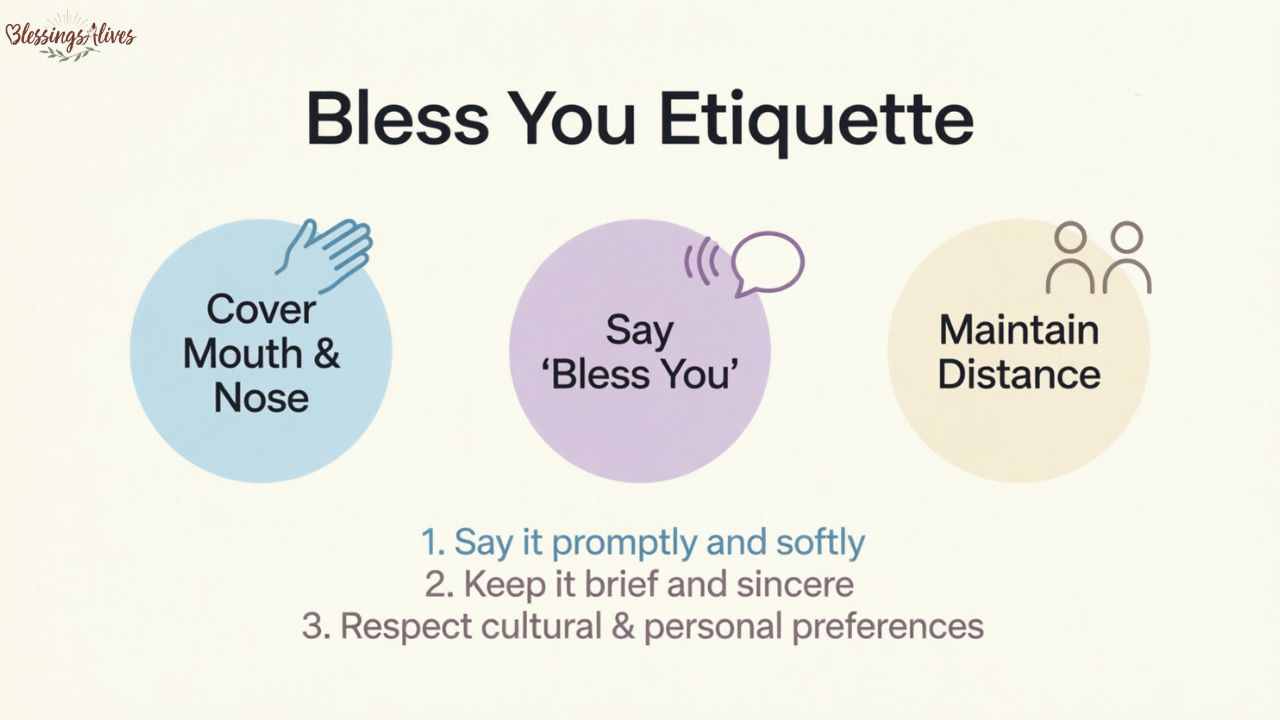
In modern etiquette, saying “Bless You” after someone sneezes is considered a polite and thoughtful gesture in many cultures. While it is not required, many people use the phrase to acknowledge the sneeze and show courtesy during everyday conversations. Others choose different responses or say nothing, depending on personal preference, social setting, or cultural background, making respect and consideration the most important part of the interaction.
Myths and Facts About Saying God Bless You
Many myths and facts surround the tradition of saying “God Bless You” after a sneeze. Some people believe it protects against bad luck or evil spirits, while others think it has only religious meaning. Historical records show the custom grew from old beliefs, disease outbreaks, and social traditions, but today it is mainly a polite expression of kindness and good manners rather than a practice based on superstition.
Popular Myths
Many myths claim that saying “God bless you” protects people from evil spirits or prevents bad luck after a sneeze. These ideas come from old folklore and traditional beliefs rather than proven evidence. Even so, they helped shape a custom that continues in many cultures today.
Historical Facts
Historical facts show that the phrase became popular through religious traditions, ancient beliefs, and events such as the Black Death. Pope Gregory I is often linked to encouraging the expression as a prayer during difficult times. Over the centuries, it developed into a common sign of courtesy.
Common Misconceptions
A common misconception is that everyone says “God bless you” for religious reasons. In reality, many people use it simply as a polite response after a sneeze without thinking about its history or spiritual meaning. Today, the expression is widely recognized as part of everyday social etiquette.
Interesting Facts About Sneezing and Bless You
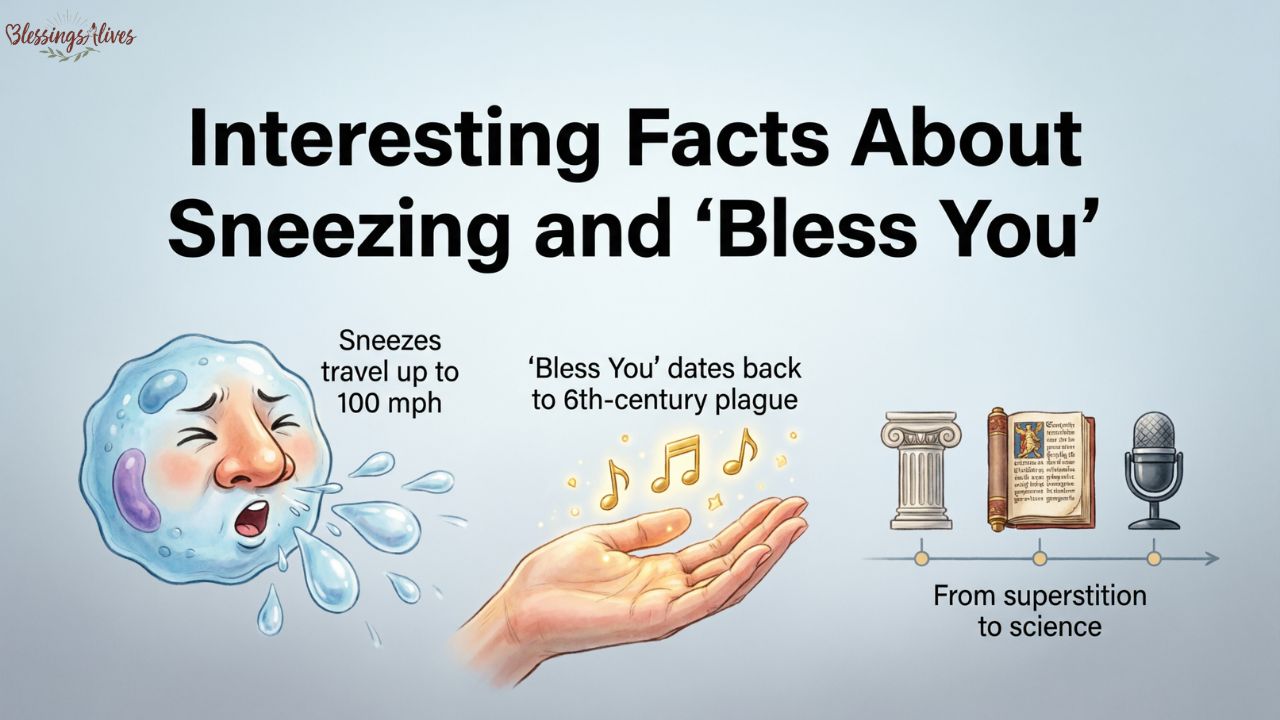
Sneezing is a natural reflex that helps clear dust, allergens, and other irritants from the nose, while saying “Bless You” has become a long-standing social custom. Different cultures have their own responses after a sneeze, showing how this simple moment is recognized around the world. Although science explains why people sneeze, the tradition of offering kind words continues as a symbol of courtesy, respect, and friendly interaction.
Why People Cannot Sneeze with Their Eyes Open
One interesting fact about sneezing is that most people naturally close their eyes during the reflex. This happens because the body activates different muscles at the same time to protect and control the sneeze response. Although some people try to keep their eyes open, the natural reaction makes it difficult for most individuals.
How Different Cultures React to Sneezing
Different cultures have unique ways to respond when someone sneezes, showing their own customs and traditions. Some countries use words connected with health, while others offer wishes for happiness or well-being. These cultural reactions highlight how simple moments can carry different meanings across societies.
Fun Facts About Bless You
The phrase “Bless You” has a long history and remains one of the most recognized polite expressions worldwide. People use it in many situations after sneezing, whether because of tradition, habit, or kindness. This small phrase connects language, culture, and social manners in everyday life.
Read More : 250+ Good Morning Sunday Blessings, Quotes & Prayers
Frequently Asked Questions
What is the meaning of God Bless You?
God Bless You means offering good wishes, care, or protection, often used after sneezing as a polite expression.
Why do people say this phrase after someone sneezes?
People use this saying after sneezing because of historical traditions, cultural customs, and beliefs connected with health and kindness.
When did this tradition of saying it begin?
The tradition started centuries ago and became popular through religious beliefs, the Black Death, and social etiquette practices.
Is this phrase connected to Christianity?
Yes, God Bless You has Christian roots because it reflects prayer, faith, and asking for divine protection.
Do all countries use the same response after sneezing?
No, different cultures use unique expressions, including Gesundheit, Salud, and À Tes Souhaits, to show respect after sneezing.
Is saying this phrase still common today?
Yes, the phrase remains common because it represents kindness, manners, and a traditional response in everyday conversations.
Is it rude not to say anything after someone sneezes?
No, silence is usually acceptable, but saying the phrase is considered a friendly and polite gesture.
Conclusion
Why Do People Say God Bless You is a question connected with history, culture, and kindness. The phrase started from old beliefs about sneezing, health, and protection. Over time, it became a common expression used by people around the world. Many say it because of tradition, while others use it as a polite way to show care and respect.
Today, God Bless You is more than a religious phrase for many people. It represents good wishes, social manners, and friendly communication. Understanding its origin helps us appreciate how simple words can carry cultural meaning. This tradition continues because it brings a small moment of kindness into everyday life.

Hi, I’m Asma, the founder of Blessingsalives
It is a creative digital platform focused on sharing uplifting content, simple ideas, and meaningful inspiration for everyday life.